
How Does the Design of a Tower Fan Affect Its Performance and Efficiency
Table of Contents
1. How Does the Motor Design of a Tower Fan Impact Airflow Efficiency?
2. What Are the Advantages of Oscillation in Tower Fan Design?
3. How Do Different Speed Settings Affect the Performance of a Tower Fan?
4. How Does the LED Display in Tower Fans Enhance User Experience?
5. What Role Does the Timer Function Play in Tower Fan Energy Efficiency?
6. How Does Lighting Design Contribute to the Aesthetic and Functionality of a Tower Fan?
7. Why Is Remote Control a Key Feature in Modern Tower Fan Design?
8. How Do Advanced Filtration and Ionization Improve Air Quality in Tower Fans?
9. What Are the Benefits of Customization in Tower Fan Design for Consumers?
Introduction
As the demand for efficient and comfortable air cooling solutions rises, the design of tower fans has become a critical factor in enhancing performance, energy efficiency, and user experience. Tower fans, which offer a space-saving design with powerful airflow, are becoming a preferred choice for homes and offices. In this article, we will dive into how various design elements such as motor efficiency, oscillation functionality, speed settings, LED displays, and more influence the performance of tower fans. We will also explore the added value of features like ionization, filtration, and customization options, which make modern tower fans not only functional but also aesthetically pleasing and user-friendly.
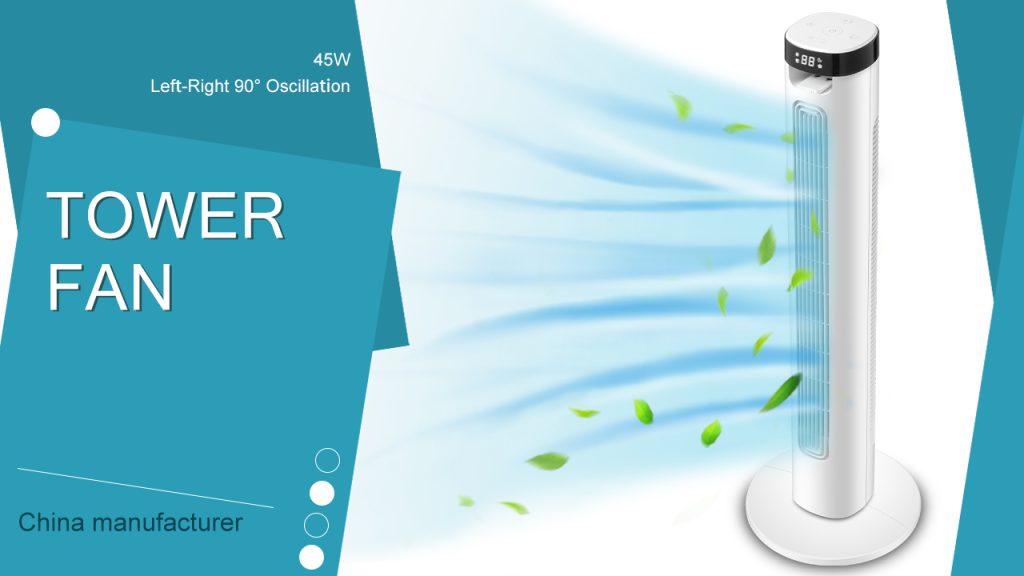
1. How Does the Motor Design of a Tower Fan Impact Airflow Efficiency?
The motor is the heart of any tower fan, and its design plays a pivotal role in determining the airflow efficiency. In tower fans, there are typically two types of motors used: AC (Alternating Current) motors and DC (Direct Current) motors. AC motors are commonly used in conventional fans, offering good performance but often at the cost of energy efficiency. On the other hand, DC motors, which are becoming more common in modern tower fans, offer superior energy efficiency by adjusting their speed according to the need, which directly impacts the fan’s power consumption and noise level.
DC motors are capable of delivering more precise control over the fan’s speed and airflow direction, contributing to quieter operation and more efficient cooling. As a result, tower fans with DC motors are often preferred for their low energy consumption, extended motor lifespan, and enhanced airflow control. When evaluating a tower fan’s motor design, consumers should focus on factors such as the type of motor, its RPM (revolutions per minute), and how effectively the motor delivers airflow across different speed settings.
2. What Are the Advantages of Oscillation in Tower Fan Design?
Oscillation is one of the key features that enhances the performance of a tower fan. This feature allows the fan to rotate horizontally (and sometimes vertically), distributing cool air across a wider area. Tower fans with 90-degree oscillation are particularly effective in ensuring that airflow is evenly spread across the room. Some models even feature advanced oscillation systems, such as 360-degree oscillation, to ensure maximum coverage.
Oscillation is important because it prevents the air from being concentrated in one spot, promoting even air circulation throughout the room. This is especially useful in larger spaces where a fixed fan may struggle to cover the entire area. Additionally, advanced oscillation systems contribute to a better cooling effect, as the air circulates and mixes with the room’s ambient temperature. For buyers, oscillation is a crucial aspect to consider when selecting a tower fan, as it ensures a more effective and widespread cooling performance.
3. How Do Different Speed Settings Affect the Performance of a Tower Fan?
One of the essential features to look for in a tower fan is the range of speed settings it offers. Most tower fans come with multiple speed settings such as low, medium, and high, and some even include eco or sleep modes. These settings determine how fast the motor runs, which directly influences the volume of airflow produced. The more speed settings a fan has, the more flexible it becomes in terms of operation.
Low speed settings are ideal for maintaining a gentle breeze in the room, while higher speeds are more suitable for intense cooling, especially in larger spaces. In eco or sleep modes, the fan runs at a lower speed to minimize energy consumption and noise, making these modes suitable for nighttime use. By offering a variety of speed settings, manufacturers allow consumers to tailor the fan’s performance to their specific needs, improving energy efficiency without compromising on comfort.
4. How Does the LED Display in Tower Fans Enhance User Experience?
The LED display is an essential component of modern tower fan designs. It serves as an interface for users to interact with the fan’s various features, providing information about the current settings such as speed, mode, timer, and temperature. Tower fans with large, clear LED displays offer enhanced visibility, making it easier for users to control the fan’s settings, even from a distance.
Some advanced tower fans also include touch-sensitive LED panels that allow for quick and intuitive control. The LED display enhances user experience by providing real-time feedback on the fan’s settings and performance. In addition to displaying the operational status, the LED display often includes icons or symbols that indicate the current mode (such as cooling or sleep mode), making it easier for users to understand and operate the fan without constantly referring to the manual.
5. What Role Does the Timer Function Play in Tower Fan Energy Efficiency?
The timer function is another essential feature found in many modern tower fans. This function allows users to set a specific duration for the fan to operate, after which it automatically shuts off. For example, a 12-hour timer means the fan will run for 12 hours and then stop, saving energy when it’s not needed. The timer feature is ideal for use at night or when the room doesn’t need continuous airflow.
The timer function also contributes to energy efficiency, as it prevents the fan from running unnecessarily, reducing electricity consumption. In addition, the timer can be set to operate at lower speeds during certain times, further optimizing energy use. For consumers, the timer function is a valuable feature that helps reduce electricity costs while providing customizable comfort levels.
6. How Does Lighting Design Contribute to the Aesthetic and Functionality of a Tower Fan?
Lighting design in tower fans is an often-overlooked feature, but it plays a significant role in enhancing the fan’s overall aesthetic and functionality. Many modern tower fans come with built-in LED lights that provide not only visual appeal but also functional benefits. These lights can be set to different colors, such as orange or blue, allowing users to adjust the ambiance of the room based on personal preferences.
In addition to aesthetic value, some tower fans use their lighting design as a way to indicate different operational modes. For example, a blue light could signify the fan is running in eco-mode, while an orange light might indicate normal or high-speed operation. This dual-functionality makes the fan not only a cooling appliance but also a source of ambient lighting, adding to the comfort of the space it occupies.
7. Why Is Remote Control a Key Feature in Modern Tower Fan Design?
Remote control functionality is a highly sought-after feature in modern tower fans. It allows users to control the fan’s settings from a distance, making it especially convenient when the fan is placed in hard-to-reach spots or when adjusting the fan in a large room. The ability to control a tower fan from across the room makes it more user-friendly and contributes to a more comfortable experience.
Modern tower fans typically come with a remote control that can adjust settings such as speed, oscillation direction, and power on/off. Some models also include additional features like timers and lighting control via remote, making the fan even more versatile. With the advancement of technology, many tower fans are now designed to be compatible with mobile apps, allowing users to control the fan remotely via smartphones, further enhancing the user experience.
8. How Do Advanced Filtration and Ionization Improve Air Quality in Tower Fans?
Advanced filtration and ionization are some of the most important features that set modern tower fans apart from traditional models. These systems work to improve the air quality in the room by removing dust, allergens, and other particles that can be harmful to health. Tower fans equipped with HEPA filters, ionizers, or UV-C light provide a more comprehensive solution for indoor air purification.
Ionization works by releasing negative ions into the air, which help to attract and neutralize dust and other airborne particles. This process results in cleaner, fresher air, making it an ideal feature for people with allergies or respiratory issues. HEPA filters further improve air quality by trapping tiny particles that can cause health problems. For consumers, tower fans with filtration and ionization capabilities offer not just cooling but also a healthier indoor environment.
9. What Are the Benefits of Customization in Tower Fan Design for Consumers?
Customization is a crucial factor in today’s consumer market, and it applies to tower fans as well. Modern consumers want appliances that reflect their style and meet their specific needs. Customization options in tower fans allow consumers to select the color, design, and sometimes even the features of the fan. This personalization option helps to ensure that the fan fits well with the interior decor and preferences of the user.
Additionally, customization extends to the fan’s functionality. Many tower fans offer options for consumers to choose specific settings such as air ionization, Wi-Fi connectivity, and remote control features. By offering these customization options, manufacturers provide a more tailored solution that enhances the user experience and satisfies individual requirements, making it a highly attractive feature for a wide range of buyers.
Conclusion
In conclusion, tower fans are essential for modern air circulation and cooling needs. Understanding the impact of motor design, oscillation, speed settings, and advanced features like lighting, remote control, and ionization is critical in choosing the right fan for a given space. Consumers should consider their needs regarding energy efficiency, air quality improvement, and customization when selecting a tower fan. The advanced design features and flexibility offered by these products make them a valuable investment for any household or office space looking to optimize airflow and comfort.
Frequently Asked Questions
1. How does a tower fan with a DC motor compare to one with an AC motor in terms of energy efficiency?
A tower fan with a DC motor is typically more energy-efficient compared to one with an AC motor. DC motors adjust their speed based on the demand, which reduces power consumption and increases overall efficiency. This feature allows for longer operational hours with less energy consumption.
2. What are the key safety features to look for in a tower fan?
When purchasing a tower fan, it’s important to consider features such as overheating protection, a child lock function, and automatic shut-off timers. These safety features ensure that the fan operates safely, particularly in homes with children or pets.
3. Can a tower fan be used for both cooling and air purification?
Yes, some advanced tower fans come with built-in filtration systems or ionizers that help purify the air while also providing cooling. These fans remove dust, allergens, and other particles from the air, making them ideal for improving air quality in addition to providing cooling.
4. How does the oscillation feature in a tower fan improve cooling efficiency?
Oscillation allows the fan to distribute airflow across a larger area, improving the efficiency of cooling in a room. Fans with a 90-degree oscillation or even 360-degree rotation can cover a wider space, ensuring that the cool air circulates evenly throughout the room.
5. What is the benefit of having a remote control with a tower fan?
A remote control allows users to adjust the fan’s settings from a distance, adding convenience and ease of use. With a remote, users can change the fan’s speed, oscillation, and timer settings without needing to get up, offering a more comfortable and user-friendly experience.