
Why Are 2000W Household Electric Panel Mica Heaters Widely Used for Indoor Heating?
By Ricardo – Marketing Director
Electric panel heaters have become an important category in modern indoor heating solutions.
Compared with traditional fan heaters, panel heaters provide quiet operation,
stable heat output, and a cleaner appearance that fits well into residential environments.
Among different technologies, 2000W household electric panel mica heaters are widely used
for their balanced performance and practical design.
From a manufacturing perspective, mica panel heaters are not only finished heating products,
but also mature heating solutions that integrate thermal structure, electronic control,
and safety design.
Understanding why 2000W mica panel heaters are commonly applied helps buyers and product planners
make more informed sourcing decisions.
Product positioning of household mica panel heaters
Household mica panel heaters are typically positioned for indoor residential heating,
including bedrooms, living rooms, apartments, and home offices.
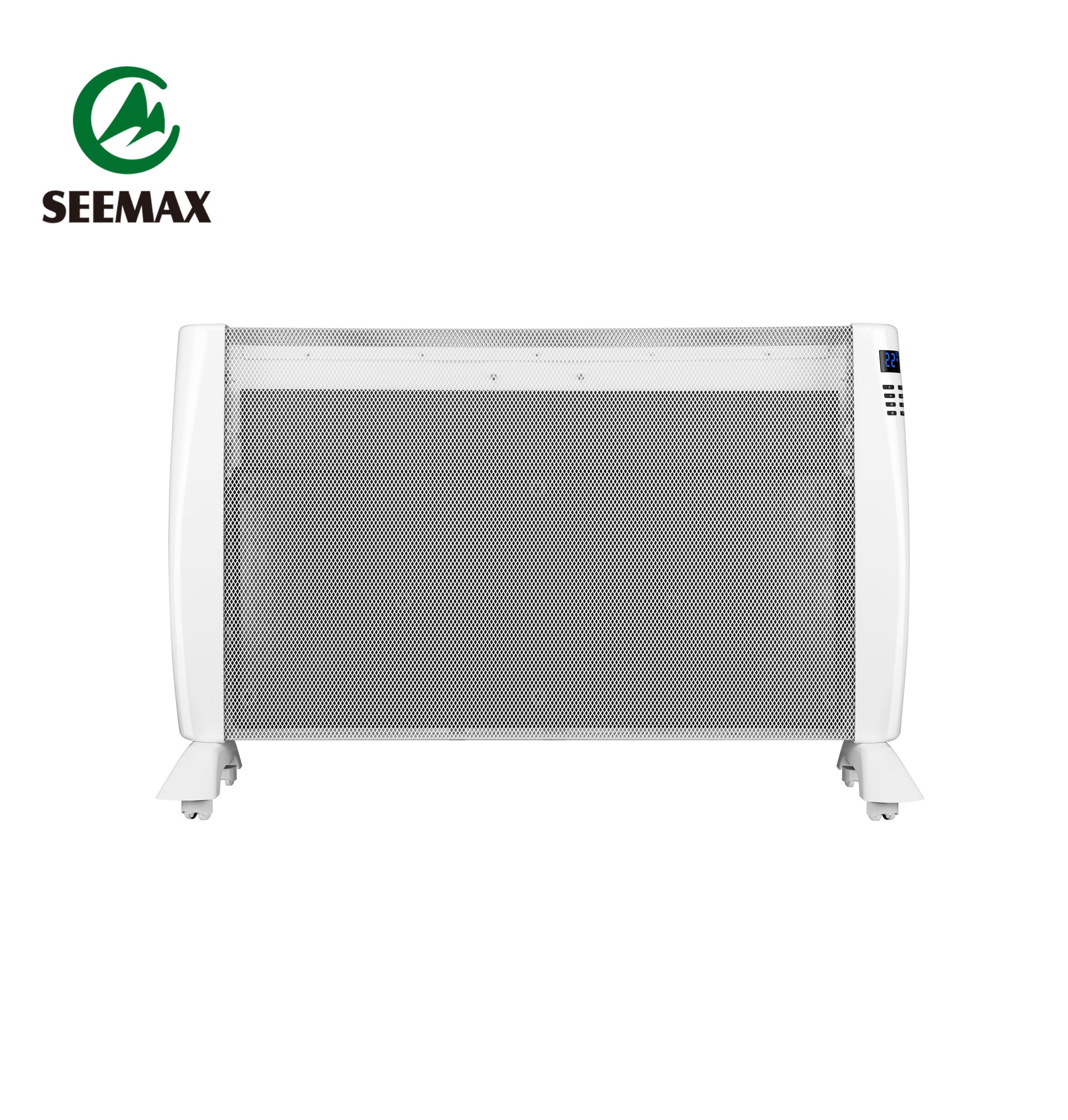
Their flat panel structure allows flexible placement without occupying excessive space.
With higher power output such as 2000W, these heaters are suitable for medium to large indoor areas,
providing fast and stable background heating without forced airflow.
Technical specifications reference for a 2000W mica panel heater
The following technical specifications are based on a 2000W household electric panel mica heater configuration.
They provide a clear reference for evaluating product capability, application scope,
and manufacturing readiness.
| Product Type | Mica Panel Heater |
| Model Number | MH-1905-20 |
| Rated Power | 2000W |
| Product Size | 86.5 × 26.5 × 55.5 cm |
| Color Options | White, Customized |
| Certification | CB, CE, EMC, GS, RoHS |
| Plug Type | AU, UK, EU, US, Other |
| Customization | Customized logo |
| Supply Ability | 100000 pieces per month |
| Trading Term | FOB |
| Port | Xiaolan Zhongshan, Shenzhen, Guangzhou |
How mica heating technology works in panel heaters
Mica heating technology is known for fast heat response and even heat distribution.
The mica sheet acts as an efficient heat transfer medium,
allowing the heater to reach operating temperature quickly.
In a 2000W panel heater, mica heating elements support stable and consistent heat output,
making them suitable for long-duration indoor heating applications.
Electronic control and LED display integration
Modern mica panel heaters often integrate LED displays to improve user interaction.
The control system manages power output, operating modes, and safety logic through internal PCB design.
For readers who want to review a real product example,
this household electric panel mica heater can be viewed here:
2000W household electric panel mica heater
.
Safety considerations in household electric panel heaters
Safety is a critical factor in electric heating products.
Mica panel heaters are designed with multiple protection mechanisms,
including stable heating element placement, electrical insulation,
and controlled temperature management.
Compliance with international safety standards supports reliable use
across different regions and market requirements.
Manufacturing consistency and supply capability
From a manufacturing standpoint, mica panel heaters are well suited for scalable production.
Standardized components and mature assembly processes help ensure stable quality
and consistent output across large production volumes.
This makes 2000W mica panel heaters a practical option for long-term household heating programs.
Application scenarios for indoor heating
Typical application scenarios include bedrooms, living rooms, apartments,
and other residential indoor spaces where quiet and stable heating is required.
The flat panel design and high power output make these heaters suitable
for modern homes seeking efficient and unobtrusive heating solutions.
Conclusion understanding the value of 2000W mica panel heater solutions
2000W household electric panel mica heaters are widely used in indoor heating
because they balance heating efficiency, safety, design, and manufacturing reliability.
By understanding their structure, technology, and application characteristics,
buyers can better evaluate their role in modern residential heating solutions.