
What Makes a 220–240V 50Hz Electric Stand Fan a Good Choice for Indoor Cooling?
By Ricardo – Marketing Director
Electric stand fans remain a staple solution for indoor cooling in residential and commercial environments.
Compared with ceiling fans, tower fans, or air circulation units, electric stand fans offer direct airflow,
easy installation, and flexible positioning.
In this article we explore what makes a 220–240V 50Hz electric stand fan an effective choice for indoor cooling,
based on practical design features, technical specifications, and manufacturing considerations.
This discussion references a real example of a stand fan solution here:
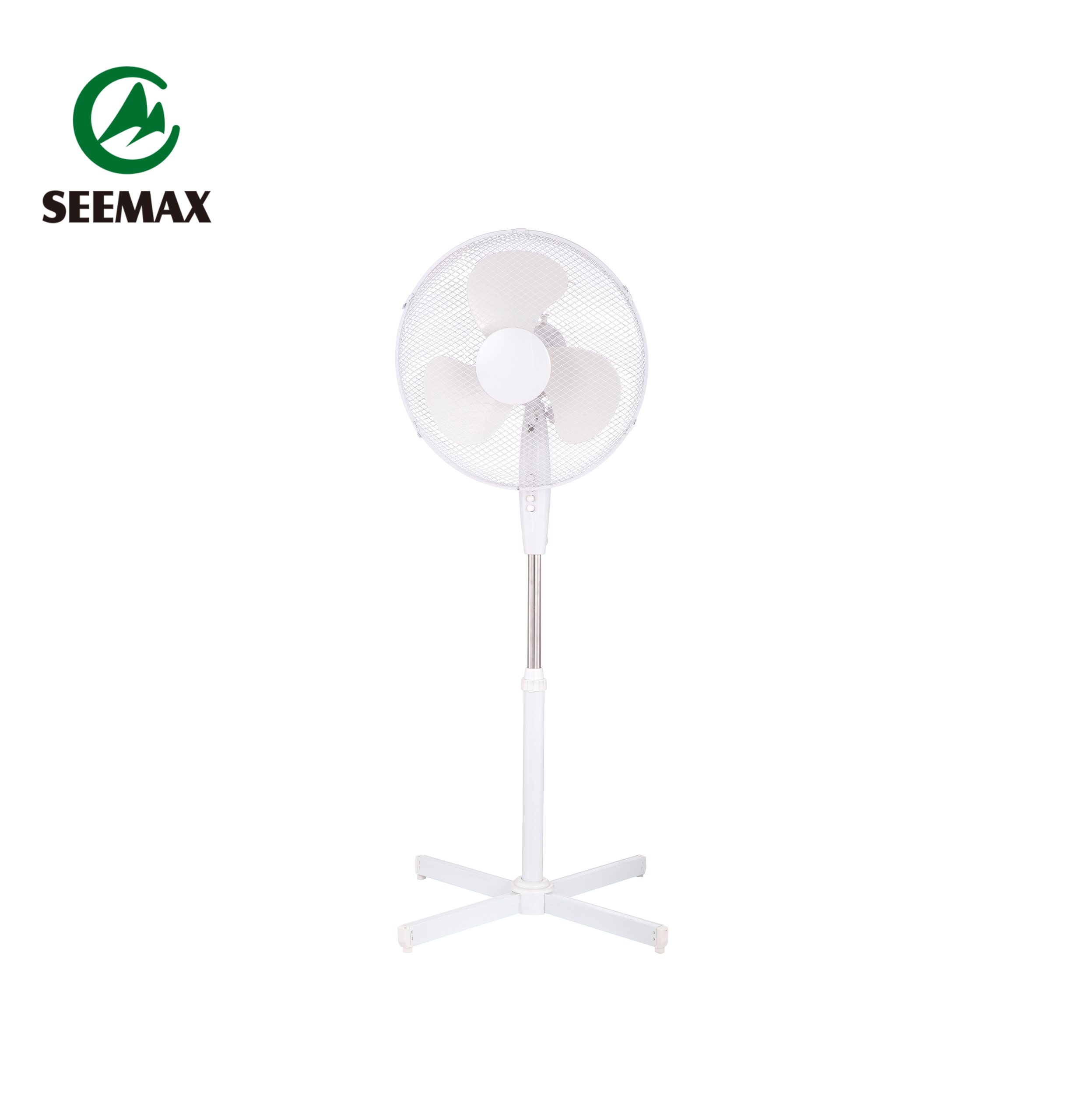
220–240V 50Hz Electric Stand Fan
,
helping buyers understand performance and design advantages from a manufacturing viewpoint.
How electric stand fans are positioned in indoor cooling solutions
Electric stand fans are commonly used for direct airflow delivery in living rooms,
bedrooms, offices, shops, and hospitality areas.
Their main purpose is to enhance air circulation and provide perceptible cooling rather than
lower the ambient temperature like air conditioners.
With 220–240V and 50Hz electrical operation, these fans are well suited for most international residential and
commercial power standards.
They serve as a cost-effective and energy-efficient supplemental cooling option.
Technical specifications of 220–240V 50Hz electric stand fan
The following table outlines key specifications for a representative electric stand fan model.
These structured specifications help buyers and engineers assess product capability and compatibility.
| Product Category | Electric Stand Fan |
| Model Number | FE-40 (example) |
| Voltage | 220–240V ~ 50Hz |
| Rated Power | 100W |
| Dimensions | 50 × 19.5 × 48 cm |
| Blade Size | 14 inch |
| Color Options | Chrome, Copper, Black |
| Certification | CE, RoHS, ERP, GS, CB |
| Control Type | Manual / High-Medium-Low |
| Plug Types | AU, UK, EU, US, Other |
| OEM Support | Yes |
| Sample Support | Yes |
| Supply Ability | 100000 pieces per month |
| Trading Term | FOB |
| Port | Xiaolan Zhongshan, Shenzhen, Guangzhou |
Airflow performance and user comfort
Electric stand fans deliver direct airflow targeted at occupants, which provides immediate
cooling sensation.
Multiple speed settings (generally low, medium, and high) allow users to adjust airflow strength
based on their comfort needs.
Stand fans are especially useful in spaces that require:
- Quick circulation of air
- Targeted cooling for seated or stationary activities
- Supplementary cooling alongside air conditioners
Design and structural considerations
Stand fan design focuses on stability, durability, and ease of use.
Metal or reinforced plastic housings contribute to structural rigidity,
while tilt and height adjustment mechanisms improve airflow direction control.
Balanced base design helps prevent tipping,
and protective grille ensures safety during operation,
making stand fans suitable for homes, offices, and high-traffic areas.
Manufacturing and quality assurance
From a manufacturing standpoint, electric stand fans benefit from standardized components
and mature supply chains.
Consistent quality control during assembly ensures stable motor performance,
balanced blade operation, and long-term product durability.
Reliable supply capability and OEM support make these fans a practical choice
for global distribution partners, private label programs,
and branded product lines.
Application scenarios and benefits
Electric stand fans are commonly used in:
- Living rooms and bedrooms
- Small offices or home workspaces
- Retail stores and public waiting areas
- Workshops and studio spaces
Their portable nature, multi-speed control, and direct airflow delivery make them
an ideal supplemental or primary cooling choice in warm climates.
Conclusion understanding stand fan solutions
220–240V 50Hz electric stand fans provide an efficient, reliable, and flexible
indoor cooling solution.
Their direct airflow, robust structure, and ease of use make them
a strong option for residential and commercial environments.
For buyers and procurement professionals, evaluating airflow performance,
technical specifications, and manufacturing readiness helps ensure
the best choice for long-term comfort and reliability.